%202.png)
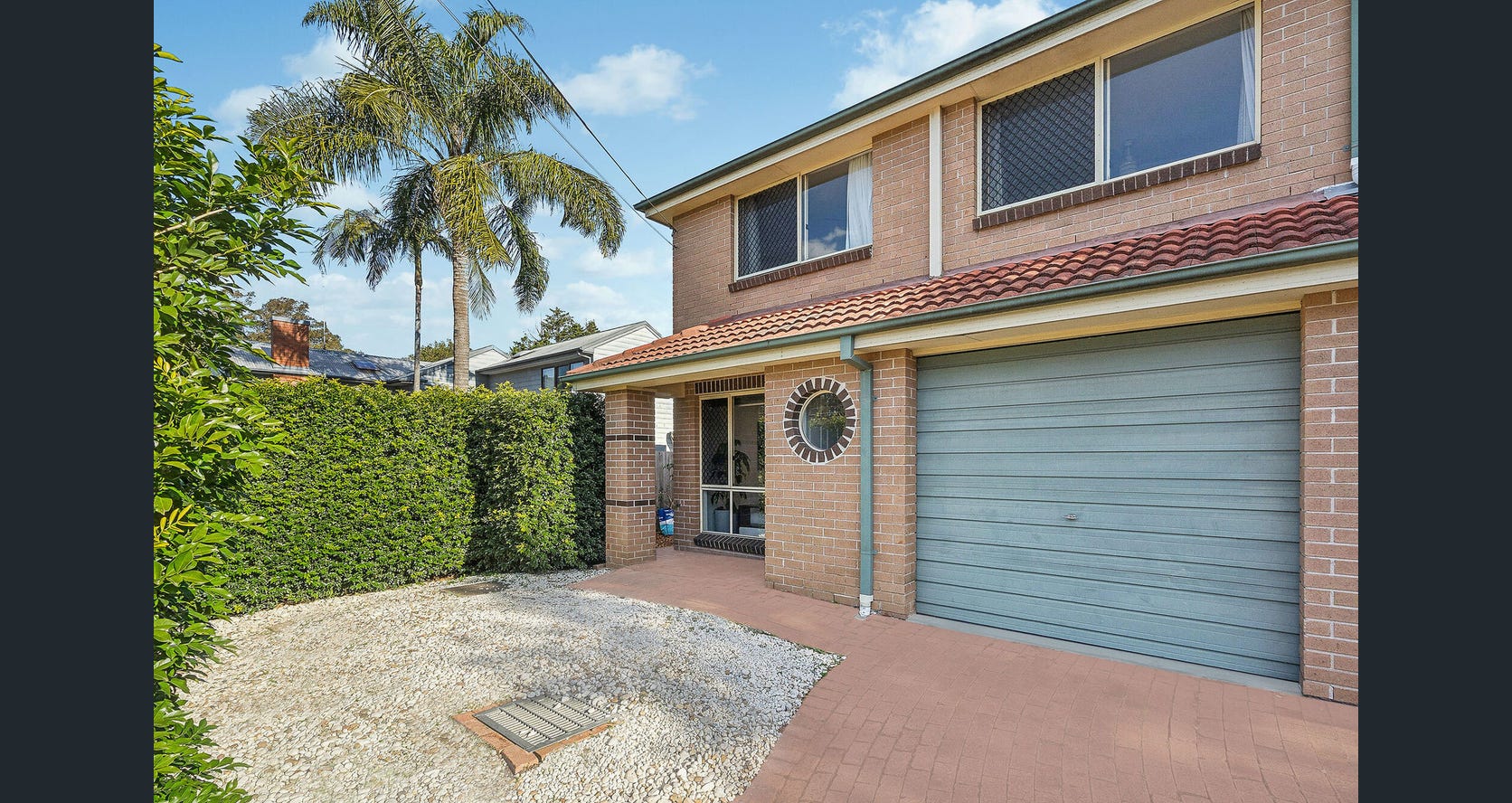
Ma and C were trying to move up from a unit in Gladesville into a house in Ryde, with young children and a growing sense that the suburb had got away from them.
They had been buying off a spreadsheet, tracking listings, running numbers, then executing badly when it came to actually transacting. Multiple misses. By the time they engaged, the frustration had turned into something closer to distress about whether Ryde was still possible at all.
Budget was $1.85 million, which was competitive for what they wanted. The problem was never the money.
The target was a Bidgee Road townhouse, a 1996 brick and tile build on a 351sqm lot, a real land component, which is rare in that format. It had already been to auction and passed in with no bidders. It had been relisted.
The reason it kept failing was on the title. The property sat in a two-lot scheme part-way through converting from strata to Torrens. Both owners had agreed and the process had started, but it was not finished. Sitting behind it were roughly $15,000 in legal costs, pending capital works on driveways and garage doors, and quarterly levies around $1,800.
Buyers were coming through, hitting that, and leaving. The listing agent could not answer the legal questions, and was reportedly telling people to buy elsewhere.
That is not a reason to avoid a property. It is a reason to do the work everyone else won't.
A solicitor was engaged and the questions were put solicitor-to-solicitor as formal requisitions. Confirmed: both owners had agreed in writing and commenced the conversion. Two problematic contract conditions were deleted. The absence of survey and occupation certificates was documented, as were the outstanding capital works items with no quotes attached.
On value, address-level comparables were thin, so the assessment leaned on cleaned algorithmic ranges cross-checked against the property's own sale history. Fair value came out at $1,825,000, about $5,199 per square metre of land.
Two other parties were interested, with pest and building reports and contracts already issued. Speed mattered, but so did certainty.
The first offer went in at $1,785,000 on 12 September. The second, the following day, at $1,800,000 — attached to a 66W certificate, a full 10 percent deposit, and a same-day acceptance window closing at 6pm.
The agent's reaction was to ask whether they could genuinely exchange that day. They could, and did.
Secured at $1,800,000: $50,000 under budget, $25,000 under assessed fair value, and below the vendor's $1.85M to $1.9M expectation. Cotality's post-sale appraisal put the purchase around $50,000 under market.
The property's own history frames what they bought into: $440,000 in 2002, $1,370,000 in 2017, $1,800,000 in 2025. And once the Torrens conversion completes, the title itself improves.
"Just amazing, so happy, just can't believe it, we are so grateful. Our family is so happy."
What decided it: paying a solicitor to answer questions the agent couldn't. That cost a few hundred dollars and removed the exact obstacle that had caused an auction to pass in and several buyers to walk. The discount was sitting there for whoever was willing to do it.
The wider lesson: when a property fails at auction for legal reasons rather than price reasons, that is an opportunity, not a warning. Most buyers cannot tell the difference between a problem that is unsolvable and one that is merely unexplained. And when a title issue is genuinely mid-resolution, a 66W with a full deposit and same-day exchange is worth more to a tired vendor than another $20,000 from someone who still has questions.


'%3E%3Cpath d='M13.5 21.9v-8.4h2.82l.42-3.27H13.5V8.14c0-.94.26-1.59 1.61-1.59h1.72V3.63c-.3-.04-1.32-.13-2.51-.13-2.49 0-4.19 1.52-4.19 4.31v2.41H7.31v3.27h2.82v8.4h3.37z'/%3E%3C/g%3E%3C/svg%3E)