%202.png)
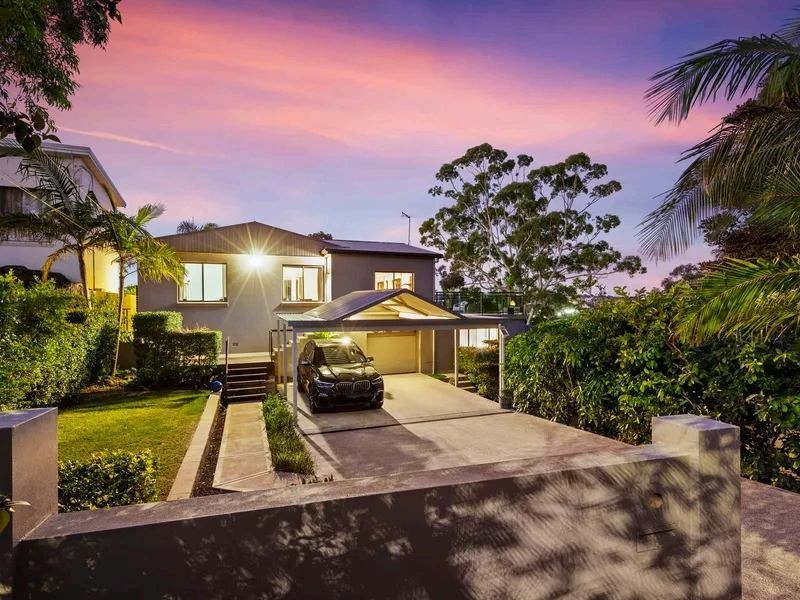
J and S were living in the United States with a young family, planning a return to Sydney. Family in Cromer decided the suburb before anything else did.
They had been trying for a while. Attending what they could, researching from a different time zone, and getting beaten on price in a hot, heavily contested Northern Beaches market. Their budget was marginal for the area, and they knew it.
There was a second problem underneath the first. Australian lenders are awkward with expat applicants. Income earned in US dollars, assets held offshore, no local employment record. Before any property conversation was worth having, the finance had to be capable of settling.
Finance came first. US income and assets were bridged into Australian lending through an expat-structured facility. Without that, none of the rest mattered.
Then the search moved off-market entirely. Competing on open listings was exactly what had been failing for months. In that market, an offshore buyer on a tight budget loses every time. The Maas Street property surfaced as an off-market opportunity, away from the open field offerings.
With no campaign to price against, CoreLogic became the anchor: $2,450,000, in a range of $2.16M to $2.75M at medium confidence. The agent independently expected $2.45M to $2.55M on market.
The offer went in at $2,300,000 in June 2023 and was rejected. The agent took it to market at the higher number.
Here is where most buyers walk. We did not withdraw the offer, because the property had problems the campaign was about to expose: a non-compliant pool, unauthorised use of the garage, bathroom leaks, and a driveway that was both incomplete and damaged. Buyers with local inspectors would find all of it.
The campaign struggled, exactly as the defects predicted. The agent came back.
The $2.3M offer had not moved. What changed was what came attached to it: the price now stood subject to a new driveway built at the vendor's cost (around $20,000), pool compliance certification, and waterproofing rectification.
That last condition mattered more than the money. Clients 15,000 kilometres away cannot inspect remediation work themselves. So the contract did not go unconditional until every item was completed and complied with — not promised, done.
Secured at $2,300,000: roughly $150,000 under the CoreLogic estimate, below the agent's expectation, and $50,000 under the client's own ceiling. The repairs sit on top of that as a further real gain.
An interim tenancy was arranged so the property earned income until the family returned from the US.
"My wife and I had an excellent experience purchasing a home with Gary as our buyers agent. As Australians living abroad buying our first home together in Australia, it was a daunting prospect to say the least. Gary's deep and broad expertise, understanding of our circumstances, and demeanor gave us great confidence — but most importantly, he delivered. I would happily act as a direct reference with a prospective customer who shares our circumstances."
What decided it: patience, backed by a reason. Leaving a rejected offer standing is only smart if you know something the campaign is about to reveal. The defects meant the market was likely to arrive at our number, not the agent's.
The wider lesson: a rejected offer is not a dead offer. If the property has issues that open-market scrutiny will surface, the vendor's position weakens while yours stays exactly where it was. And when a buyer cannot physically inspect, contract conditions have to do the work that eyes normally would — exchanging unconditional only after completion, never on undertakings.


'%3E%3Cpath d='M13.5 21.9v-8.4h2.82l.42-3.27H13.5V8.14c0-.94.26-1.59 1.61-1.59h1.72V3.63c-.3-.04-1.32-.13-2.51-.13-2.49 0-4.19 1.52-4.19 4.31v2.41H7.31v3.27h2.82v8.4h3.37z'/%3E%3C/g%3E%3C/svg%3E)