%202.png)
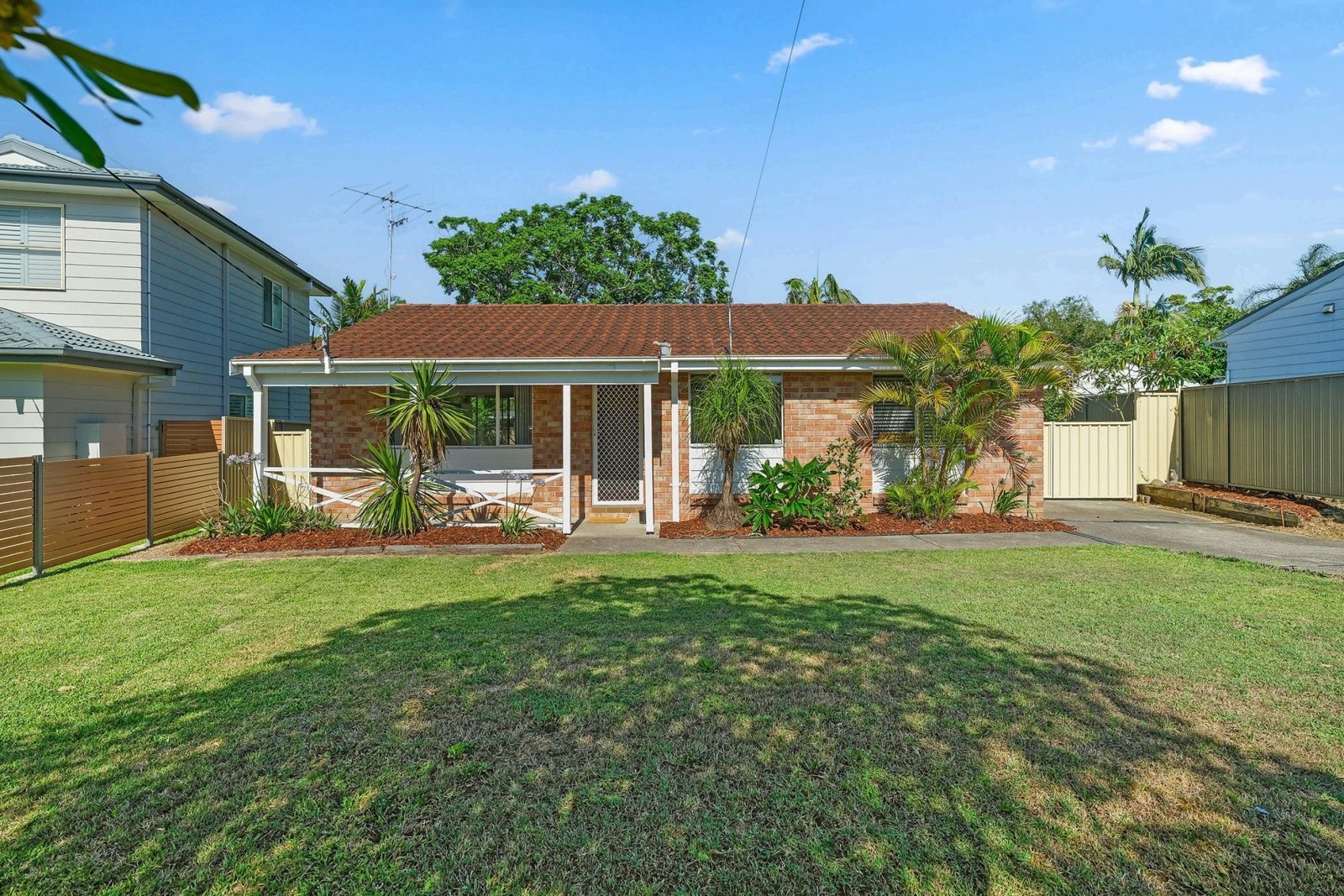
J and B came back for a second purchase. The first, at Long Jetty, had worked. This time the plan was to scale properly: an asset that could rent immediately, in a suburb with real growth behind it, on enough land to add a granny flat down the track.
They arrived with a budget of $650,000 to $700,000. Reasonable on paper. The problem was the market they were walking into.
The Central Coast was mid-incentive-cycle. Government first-home-buyer support had flooded the entry tier with buyers on 0.25% deposits and five-day cooling off. Days on market had compressed to between seven and fourteen. Every property inside their range had a queue in front of it.
The uncomfortable conversation came first. Their brief could not buy the quality they were describing. Not because the number was wrong in isolation, but because that exact band was where every incentivised first-home buyer was also shopping. They were competing hardest in the tier with the least to offer them.
The recommendation was to lift to $850,000 and step out of the fight entirely. A higher tier meant fewer competing buyers, better build quality, and land that could actually take a second dwelling.
Twenty-five-plus properties were assessed against the revised brief. One stood out: a brick 3/1/2 on 554sqm in a higher socio-economic estate, low crime relative to adjoining pockets, double garage, and enough room at the rear for a future granny flat. Ready to rent with no work.
Then the read on the other side. The listing agent was old-school, and the vendor had a problem: a prior buyer had been made redundant mid-exchange and that sale had collapsed. The vendor was already committed to their next purchase. The agent wanted to re-market at a higher price. The vendor needed certainty more than upside.
The offer was built for the vendor's problem, not the agent's ambition. Fast, frictionless, deposit ready, exchange quick, no conditions that could unravel a second time.
Secured off-market on 19 January 2026 at $849,000, below the $875,000 the agent wanted to chase, and without the property ever going back to the open field of incentivised buyers.
Thirty days from engagement to exchange. It rents at $650 a week, a 3.98% gross yield, with a 554sqm block still holding the granny flat option in reserve.
"Good value compared to the others, well done, good potential to do something in the back yard later on. Build quality and the area is better than some of the others, will be a good renter. Well done."
What decided it: telling the clients their budget was wrong. Everything after that was execution. Had the brief stayed at $650,000 to $700,000, they would still be losing to first-home buyers in a compressed market.
The wider lesson: in an incentivised market, the government subsidy sets the battlefield. Buying just above the incentive band often means less competition and better stock for a marginally higher price. A collapsed prior sale is one of the strongest signals a buyer can act on, that vendor is no longer selling for price, they are selling for certainty.


'%3E%3Cpath d='M13.5 21.9v-8.4h2.82l.42-3.27H13.5V8.14c0-.94.26-1.59 1.61-1.59h1.72V3.63c-.3-.04-1.32-.13-2.51-.13-2.49 0-4.19 1.52-4.19 4.31v2.41H7.31v3.27h2.82v8.4h3.37z'/%3E%3C/g%3E%3C/svg%3E)