%202.png)
G and A had just lost a property, and not on price. The agent handling it had been unprofessional and the experience left them shaken about the whole process.
Their rental was expiring. That is the kind of deadline that makes buyers pay too much, and they knew it. A friend introduced them to Gary.
What they asked for was specific: a structured, scientific way to establish what a property was genuinely worth, and someone who could negotiate confidently on their behalf without exposing them again.
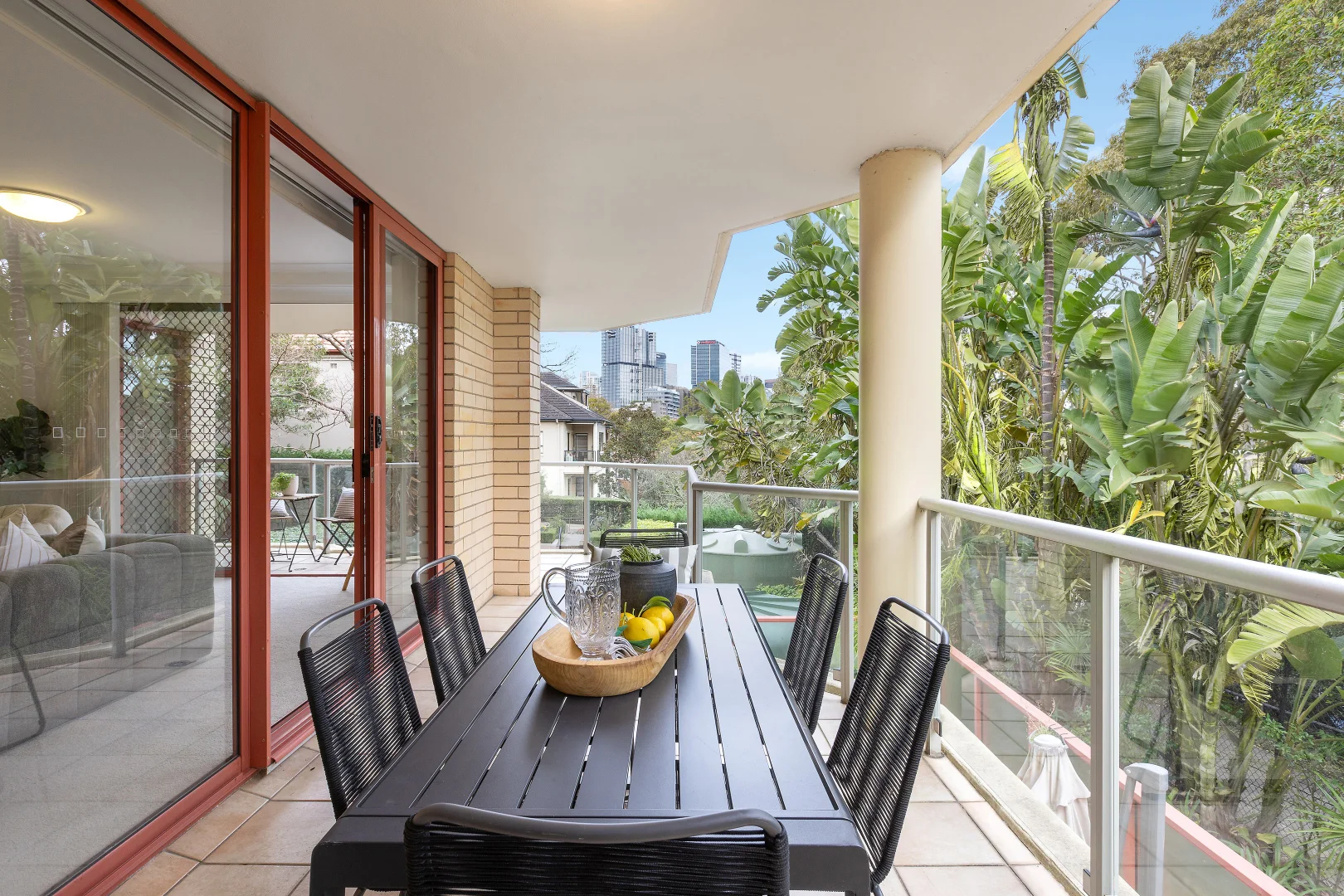
The target was a unit in the Rocklands Road block, a 1992 build, 160sqm, three bedrooms, large balconies, in a well-run multi-strata complex with low outgoings and no lifts to pay for.
The campaign was hot. Seven contracts issued, more than fifteen groups through, an auction scheduled, and offers expected in the $1.5M to $1.55M range. On the surface, a competitive fight.
Underneath, something did not add up. This agent normally sells considerably higher-value property. This listing was small for her, and the intelligence coming back was that she wanted it off the books. That combination, an agent working below their usual band, motivated to clear it, is one of the more reliable sources of mispricing in the market.
Three sales in the same building settled the question. One sold at $1,600,000 for 154sqm, which is $10,390 per square metre. Another at $1,282,500 for 121sqm, $10,599 per square metre. A third at $1,780,000 for 121sqm, $14,711 per square metre.
Across ten Wollstonecraft and Lower North Shore comparables the average was $12,912 per square metre. Applied to 160sqm, that implies somewhere between $1.66M and $2.07M, with the credible mid around $1.70M.
The largest floorplate in the block was being marketed at the lowest rate per square metre in the block. That is the whole case.
The vendor wanted $1,600,000 and the agent indicated she would push a $1,570,000 offer. But the vendor was pragmatic and had privately valued it in the low $1.5Ms, citing strata, access and refurbishment.
Three offers in two days. $1,523,000 was rejected on 4 August. $1,543,500 followed on 5 August. Then $1,547,500, accepted the same day, pre-auction.
That landed inside the vendor's acceptable zone while sitting roughly $150,000 below comparable market value. It also beat the auction and their rental deadline in a single move.
They paid $9,672 per square metre for the biggest apartment in a building where units were trading between $10,390 and $14,711.
"Gary helped us secure our first home, at the same time saving us thousands of dollars and disappointments. We had just lost another property because of the unprofessionalism of the agent... He has a structured and scientific approach to identify the right price for a property, and a wealth of experience to navigate the negotiation with confidence, avoiding any trap and problem. He also took care of us until the settlement was completed. A genuine gentleman and a great professional."
The selling agent, from McGrath, also put her view on record afterwards:
"Gary was transparent, honest and representing his client to a very high standard. He navigated negotiations with the utmost professionalism and protected his client's interests while ultimately securing them the property prior to the scheduled auction. His communication and consistency was a welcomed experience, always following through with what he said he would do."
What decided it: noticing that the agent was working below her usual price band. That single observation reframed a competitive campaign as a mispricing, and everything followed from checking whether the numbers supported the hunch. They did.
The wider lesson: always price against sales in the same building before you look anywhere else. Same strata, same management, same outgoings — the only variable is size and floor. When the largest apartment in a block is being offered at the lowest rate per square metre in that block, something is wrong with the price, not the property.


'%3E%3Cpath d='M13.5 21.9v-8.4h2.82l.42-3.27H13.5V8.14c0-.94.26-1.59 1.61-1.59h1.72V3.63c-.3-.04-1.32-.13-2.51-.13-2.49 0-4.19 1.52-4.19 4.31v2.41H7.31v3.27h2.82v8.4h3.37z'/%3E%3C/g%3E%3C/svg%3E)